


Melo Group has officially topped off their Downtown residential rental project, Square Station, less than 1 year after breaking ground. Located at 47 Northeast 14th Street, Square Station features 2 twin towers which feature 710 units and 913 parking spaces. Square Station located directly next to the Metromover Station in the Arts and Entertainment District. Rental prices expected to range from $1,600 per month for 1-bedroom units to $2,500 per month for three-bedroom units.
Read More
David Beckham and Partners Make Downpayment to Miami-Dade To Complete Overtown Stadium Assemblage
David Beckham and his partners have made a $450,000 downpayment to Miami-Dade ahead of their September 10th deadline as they move to complete the purchase of the final 3 acres of their 9 acre assemblage in Overtown to bring Miami their future MLS stadium and inaugural franchise. Beckham and his partners are looking to finalize the purchase of the final 3 acres of land currently owned by Miami-Dade via the Water and Sewer Department adjacent to the 6 acres already owned by Beckham. Beckham will not ask for local subsidies to either build or operate the stadium. They also have said they plan to pay full property tax on the land as well as the venue. On December 4, 2015 Beckham and his partners announced that they had executed sales contracts on a nine-acre property in Overtown which was formerly a Miami-Dade Water and Sewer truck depot. Beckham was originally given the option to purchase an MLS franchise when he signed with the L.A. Galaxy in 2007.
Last month we reported that Bruce Matheson had filed a lawsuit against Miami-Dade County, challenging the future use of the land on the basis of its acquisition. Matheson's suit aims to stop the $9 million sale of 3 acres which was sold based on the state of Florida's Economic-Development Law as a no-bid sale and was never offered to other buyers. Matheson has historically been opposed to sport and recreation in Miami, putting the future of the Miami Open in limbo by blocking an expansion to the stadium on Key Biscayne. Miami city officials allege that Matheson's goals seem to be to drive professional sports out of Miami. County commissioners originally approved the sale on June 6 (2017) and Beckham received league approval to officially launch Miami's franchise in August (2017). A hearing is scheduled for October 2017.


Construction Update: G&G Business Development Files Notice of Commencement to Break Ground on Aston Martin Residences
G&G Business Developments has filed a Notice of Commencement with the county to break ground on Aston Martin Residences. Aston Martin Residences will rise 66 stories and features 391 units, designed by Revuelta Architecture and Bodas Mian Anger. The tower's interiors will feature lighting and handmade detail based on the car in addition to hand-adorned residence door numbers from the same jewelers that place the logo on the hood of Aston Martin cars. The building will features floor-to-ceiling glass with no visible concrete, including glass encased support beams. Units start at $500,000 and range up to $7,000,000 for the "River and Panoramic Residences" part of the building and $14,000,000 to $35,000,000 for the "Penthouses." The ultimate unit will be a triplex penthouse that comes complete with a private pool, helipad and Aston Martin Vulcan. Amenities include 42,000 SF “Sky Amenity” deck which features a state-of-the-art fitness center, golf simulator, multiple theaters, and a curated art gallery.


NR Investment's CANVAS in the Arts + Entertainment District Unveils New Renderings of Rooftop Lounge & Ground Floor Retail
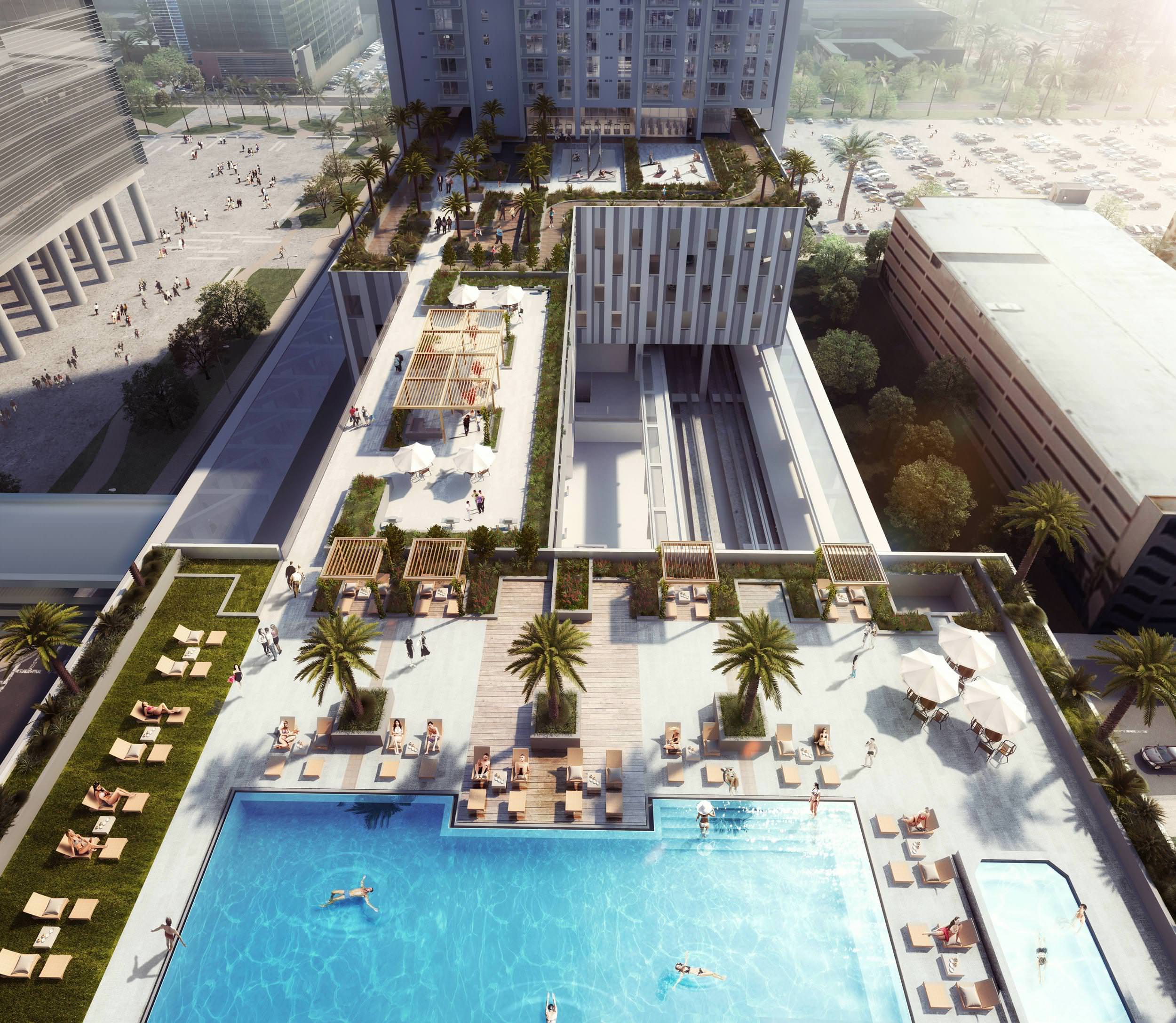
NR Investment's newly topped off 37-story residential condo project CANVAS in the Arts + Entertainment District has released new renderings its 4,500 SF rooftop lounge. In total, CANVAS has 14,500 SF or retail space with 10,000 SF or ground floor retail. The asking price is around $40 SF triple net and leasing is being overseen by Alex Acker and Frank Rodriguez Melo of Cedano Realty Advisors. CANVAS is expected to be completed for occupancy in March 2018.


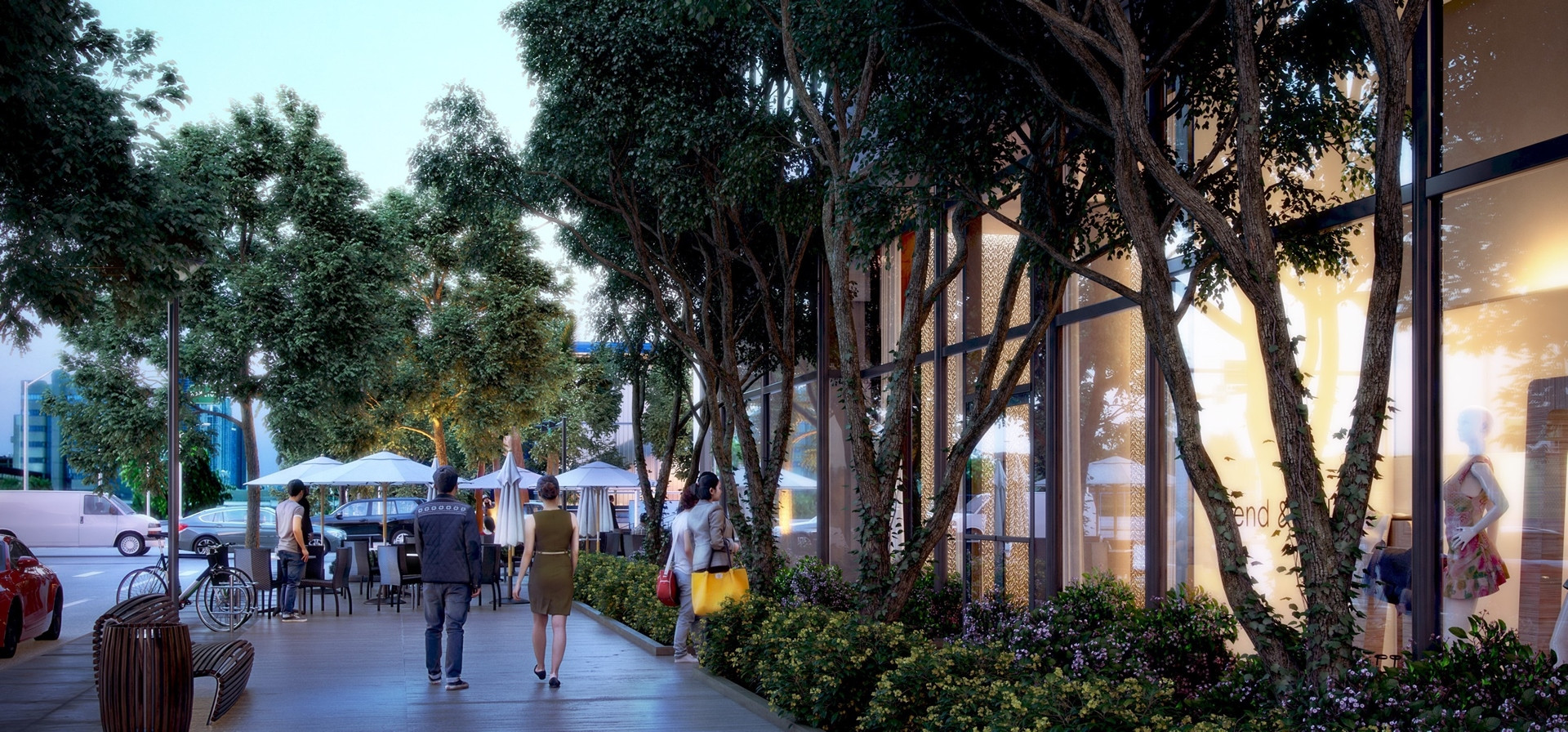
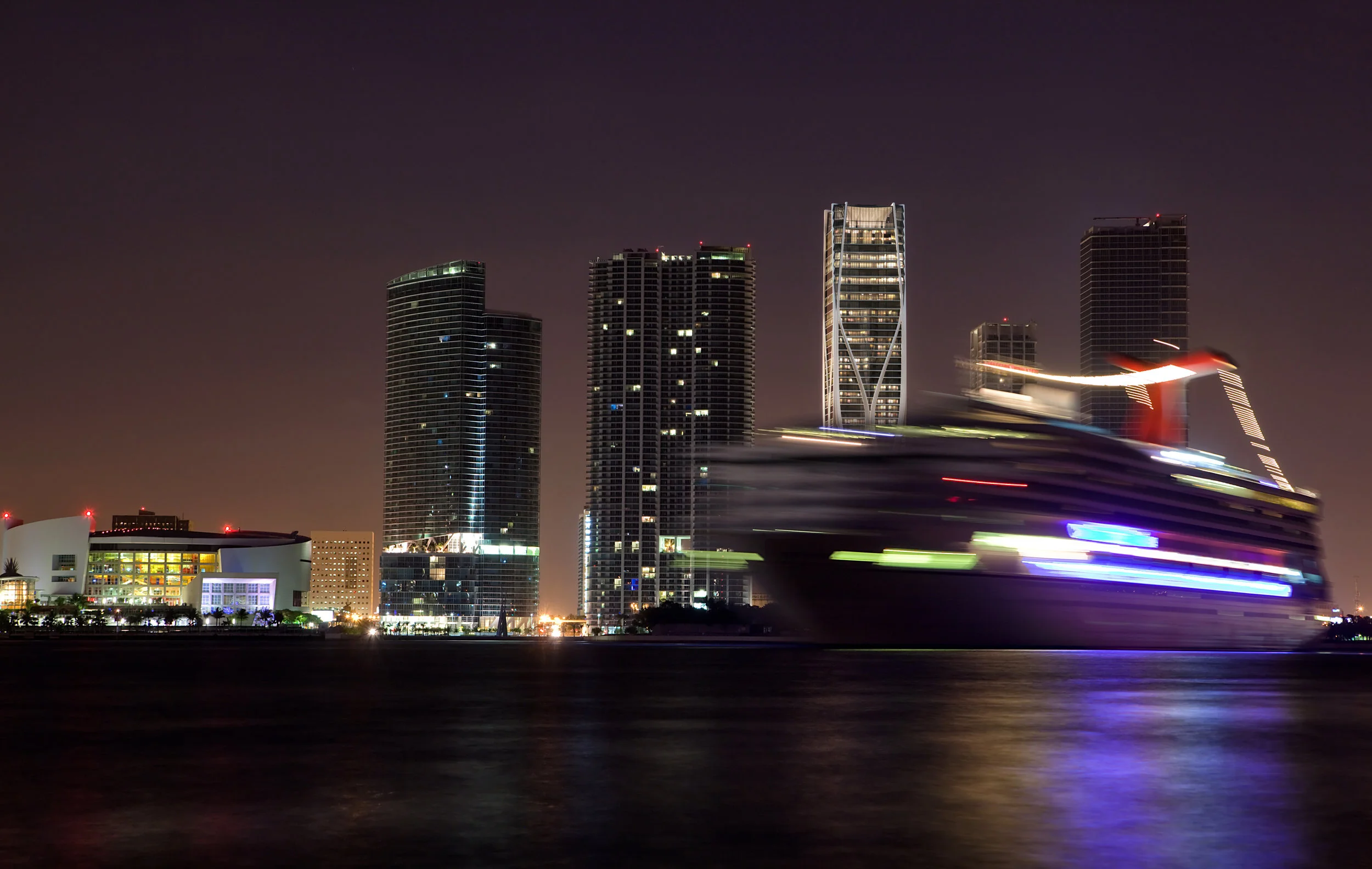
PROFILE Exclusive: Inside One Thousand Museum with Louis Birdman, Co-Developer Behind The Uber-Lux, Zaha Hadid-Designed Futuristic Tower

PROFILEmiami had the exclusive opportunity to sit down with Louis Birdman, one of the co-developers behind One Thousand Museum by Zaha Hadid Architects, to discuss the futuristic, ultra-luxury, condo tower. Louis tackles everything from working with legendary architect Zaha Hadid, to tackling the luxury market and the unique GFRC exoskeleton design that makes up the tower's unique, skyline changing, iconic design. Take a look inside the mind of one of the masterminds transforming Downtown Miami into a vibrant, modern, world-class city center.
PM: No developer had touched creating ultra-luxury in downtown Miami up until this point. What made you guys say let's be the first?
LB: When we started to see the market coming back. There was a period of time when the market imploded. It wasn’t just a Miami issue, it was a global banking issue. The first real estate market that started to rebound was New York, and shortly thereafter came Miami. The profile of buyers changed dramatically from the last peak in the market, where it was a highly speculative market that lots of investors highly leveraged. This time around, the buyers for condo products, particularly in Miami, were more focused on luxury. They were investors, but they were also end users. With a large flow of capital domestically and in Latin America, Miami has been one of the places that people look to invest in real estate.
When we saw this resurgence, we zeroed in on this site, which was a former BP station. We always looked at this site as one of the best development sites in Downtown. You have Museum Park with nothing built in front of it, you have great views of the bay and great views of Miami Beach. We had a unique site that a lot of people had interest in and is high-density. We could have put 500 units on it, but instead we decided to scale down the number of units and create an ultra-luxurious property. We wanted to create a type of unit that didn’t exist in the market place. As the market bottomed out and then moved back up, the units that were bringing the greatest premium and spending the least days on market were units that were over 3,000 SF. Less than 5% of the inventory were units over 3,000 SF and many of those were combined or the premium units like penthouses and tower suites; units that made up a small segment of the inventory in Downtown and Brickell.
We set out to create a building that fit that profile, and started looking at Miami Beach and what people were buying single-family units on the islands (Palm Island, Star Island, Hibiscus Island, Venetian Islands, Sunset Islands), and in the South of Fifth neighborhood. If we were going to attract a buyer that would otherwise be purchasing there, we had to create a building that would attract the top segment of the market. That is how we decided to create this product type in this location. Since we paid a lot of money for the site and wanted to build a few units that were very large, we knew we were going to look at absolute prices just above $5 million.
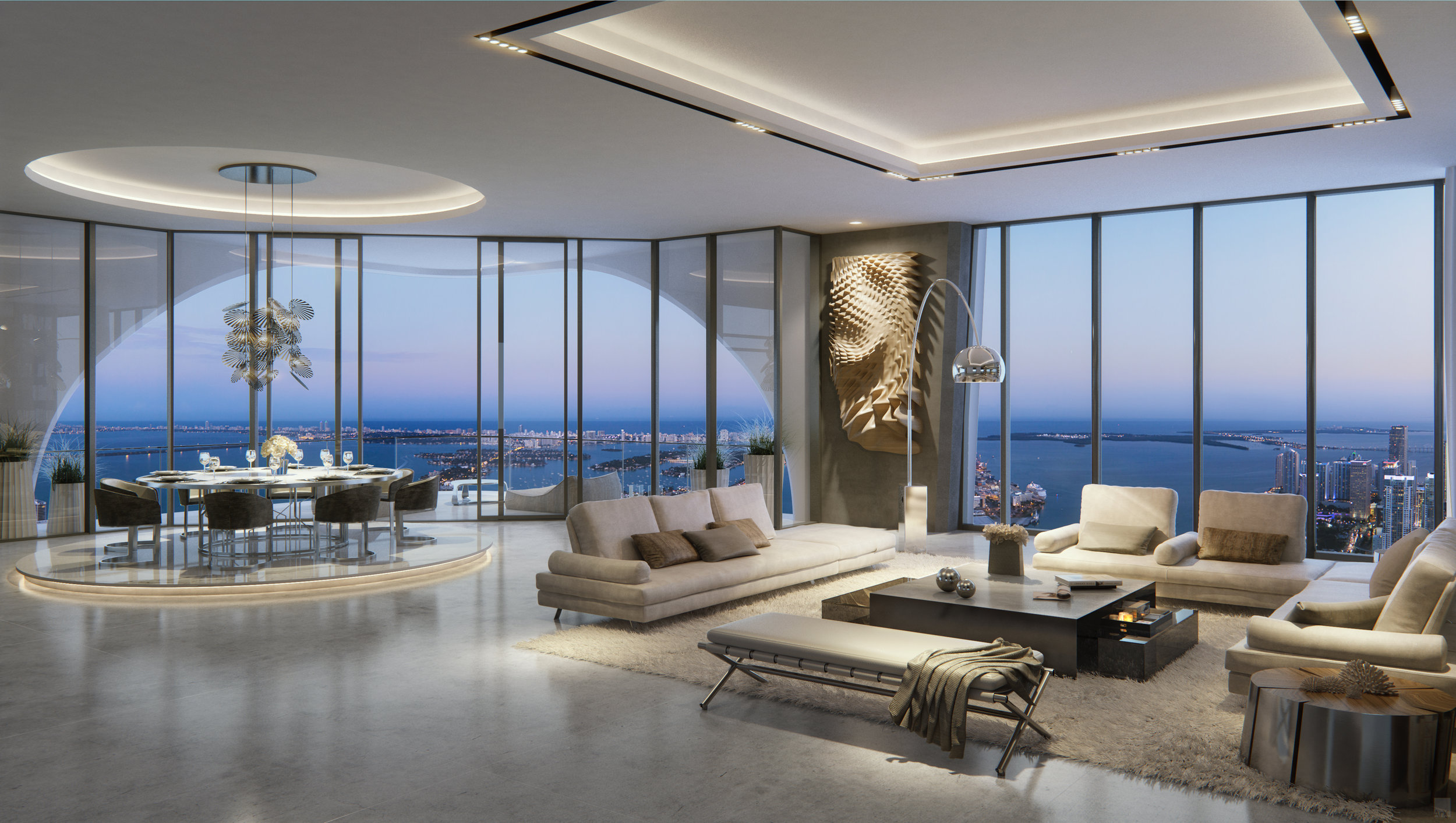
PM: Where did the idea and concept to build such an architecturally stunning building come from? When did this all of this start to come together?
LB: Because of the record number of homes being sold over $5 million and $10 million, we felt that there was enough of the market to create that type of inventory but in a luxury high-rise building. That is where the idea of bringing in someone like Zaha Hadid came from. We wanted to bring in an architect that was very high profile, maybe even controversial, who had never done anything in Miami before. Herzog & de Meuron and Rem Koolhaas already had projects here, we didn’t want someone that had already left their mark. We wanted to do something different.
Zaha was at the top of our list when we created our fantasy list of top architects. We didn’t even know whether she would have any interest or if we could get her to do a high-rise condo in Miami. As it turned out, when we pitched the project to her and her firm, they were immediately interested. Unbeknownst to us she really wanted to do something big in Miami. She had competed to get the Frost Museum of Science, she was one of the architects that submitted proposals and they ultimately went with Grimshaw Architects, a contemporary of hers from the U.K. I think for her own personal reasons it was important for her to do something like this in Miami. It was an opportunity that presented itself at the right time and her style fit our idea to create these large, out-of-the-box units.

PM: With the New York building that she did as well, 520 West 28th Street, it becomes iconic to where it becomes the “Zaha Building."
LB: Exactly. That project actually came after One Thousand Museum. She was commissioned on that project by Related Companies in New York well after the announcement of this project. We got her into that type of space, and I think Related Companies saw that we got a tremendous amount of PR as a result of getting her to do this project in Miami. They thought it was a good fit for New York. That project is really nice. It is different for that area and on a beautiful site. It is not a high-rise, but it is very unique. You see the building is immediately recognizable as a Zaha design, and I have been there on a typical weekend seeing people on the high-line walk by and take pictures all day. It is very iconic.

PM: Your background is as an architect…
LB: I’m an architect and moved to the development side in the early 1990s-2000s. On One Thousand Museum, Zaha Hadid Architects did all of the design. With my experience as an architect I am able to participate in the decisions that are being made, but they were given a free hand to design the building as they saw fit. The original design and the final design didn’t deviate very much from Zaha’s original concept.
PM: What have been some of the challenges about building such a unique, artistic structure and all of the teams and moving parts of the project?
LB: The structure is very complex. We are utilizing a system that has never been used before to build a high-rise building. We are using a pre-cast GFRC, which is a glass-fiber-reinforced-concrete, as formwork to create the construction of the building. This formwork is actually used in the construction and left in place. It is not like typical formwork where you use formwork that you pour concrete then you strip the formwork away. The building from the 15th floor up is utilizing this GFRC as formwork and from the 14th floor down we are using it as a cladding over concrete. The lower portion of the building will be covered with the same material that is used to cover the upper portion of the building. The actual product is being manufactured from the architect’s 3D model that they created in Dubai.

Examples of the GFRC Panel Exoskeloton
LB CTND: About 5,000 panels that range anywhere from 2,000 lbs. to 5,000 lbs. are “dryfit” together in Dubai and then shipped to Miami in containers in an ongoing 18-month process. The panels come into the Port of Miami and are taken to a yard in Doral where they are inventoried and checked for damage. The steel cages of rebar are fitted inside 2 GFRC panels together make the column and the brackets that you see on the corner of the building. We bring the put together pieces to the building as we work on each level. It is a process that can go on for almost 2 years from beginning to end. We are completing a floor each week on average and are up to the 50th floor right now.
The process has actually gone really well. One of the concerns we had was what if one of the panels got damaged in shipping or while being hoisted into place. We have only had 3 damaged out of nearly 4,000 panels. One was damaged being put in place and 2 were damaged in shipping to the point where they couldn’t be used. We planned ahead for these obstacles by building the lower part as cast-in-place concrete that would then be clad later, giving us a head start so that we could have 8 or 9+ floors at any one time. That way if something got damaged, we had time to have another panel replacement made and shipped back over here. They can make a panel in about a week to 10 days, but it takes a while to ship it here. We didn’t want to stop and miss a pour because we were waiting for a piece.
The whole process is being filmed for a documentary by Discovery Channel and PBS called Impossible Builds. We are going to be one of five buildings around the world that are featured in a documentary series that they are doing on buildings that are highly-complex and difficult to build.

PM: Where does the GFRC start?
LB: It starts on the first half-floor unit right above the townhouse level. The townhouse levels have big 2-story balconies formed by very round holes, which is all done in cladding. It was logistically impossible to do it as formwork. By using this GFRC form process, we are able to create very precise shapes and finishes that we could never get out of cast-in-place-concrete, at least not in a high-rise building. Everyone was wondering how it would come out and the results are really impressive.
PM: It’s interesting how style and technology can go hand-in-hand.
LB: You could never build a tower like this without the current technology that exists with computers and 3D modeling. Every time they make a change they are modifying the entire 3D model for the building. When we make a change as we are going up in the building, it affects the entire structure.
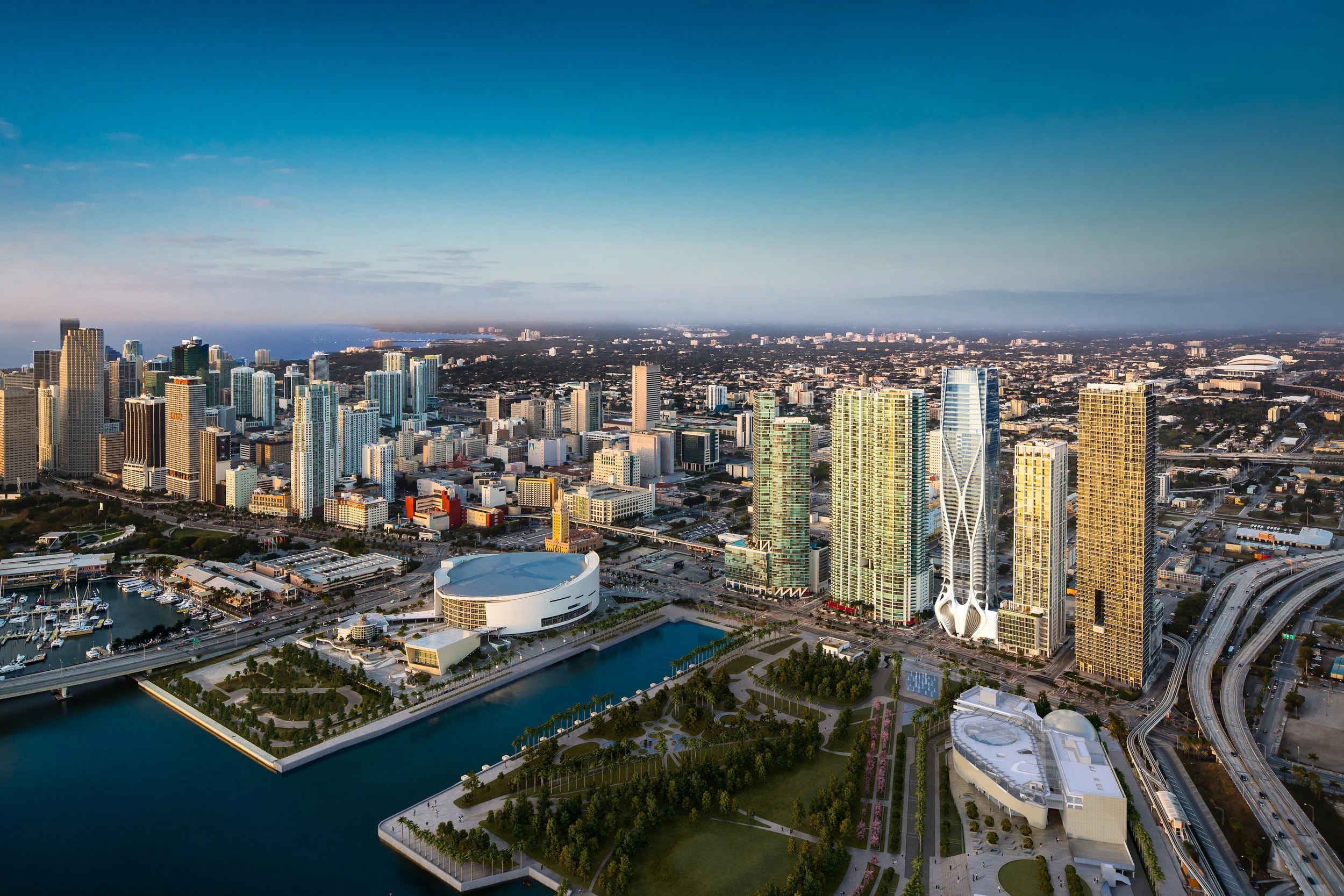
PM: How do you think this Park West area of Downtown will change over the next five years and how will One Thousand Museum contribute to this change?
LB: This area is changing at a very fast pace. The big catalysts for this are the numerous public projects. The first big one was the Adrienne Arsht center that goes back about 10 years, but the planning of it began even earlier. There was also Museum Park, which used to be called Bicentennial Park, that was going to be redeveloped to create a whole arts center. The idea of putting museums in the park, came in the early 2000s. This was an area of Downtown that was very unique. It is not often that there is an opportunity to do a major downtown redevelopment and have so much land that was ripe for development all in one place. Miami WorldCenter aggregated almost 32 acres when you add in the former arena site. 5 years from now you are going to see a very mature, developed area of Downtown because Miami WorldCenter already has seven or eight projects under various stages of development. We were the last Biscayne front piece on the park. This whole neighborhood is filling in and from the point of access, we have always felt that this end of the Biscayne corridor is much more suited for the type of intensive development that is going on. The museums are now a reality and the number of visitors that they are getting at the Frost Museum of Science has exceeded everyone’s expectations. There has been discussion about getting Museum Park into a conservancy like Millennium Park in Chicago and Central Park in New York. They have made so many improvements and activated the space for people. You are going to see more of a push to continue to improve the area.

About Louis Birdman, Co-Developer, One Thousand Museum by Zaha Hadid Architects:
For nearly three decades, real estate industry veteran Louis Birdman has taken a leadership role in the development of over 70 residential projects, comprising more than 18,000 residential units nationwide. Mr. Birdman has a significant background in property acquisitions, dispositions, entitlements, financing, planning, design, construction, sales and marketing. Mr. Birdman has been a principal investor and developer in numerous real estate developments projects throughout Florida and nationwide, including Las Vegas, Arizona, Colorado and Texas. He is also the founder and principal of Louis Birdman Architect, an architectural consulting practice that provides consulting services to developers of real estate in both related and unrelated entities. He has been a registered architect licensed in Florida since 1989 and has held architectural licenses in multiple jurisdictions in the United States, including Chicago, New York and Nevada.
Louis Birdman is currently the Co-Developer of One Thousand Museum by Zaha Hadid Architects, a 62-story, ultra-luxury high-rise condominium Tower in Miami, FL with 83 half-floor and full-floor residences. One Thousand Museum is currently under construction and scheduled for completion in mid-2018, slated to be Miami’s most iconic tower and the centerpiece of Miami’s Museum Park.

The Sales Center at One Thousand Museum
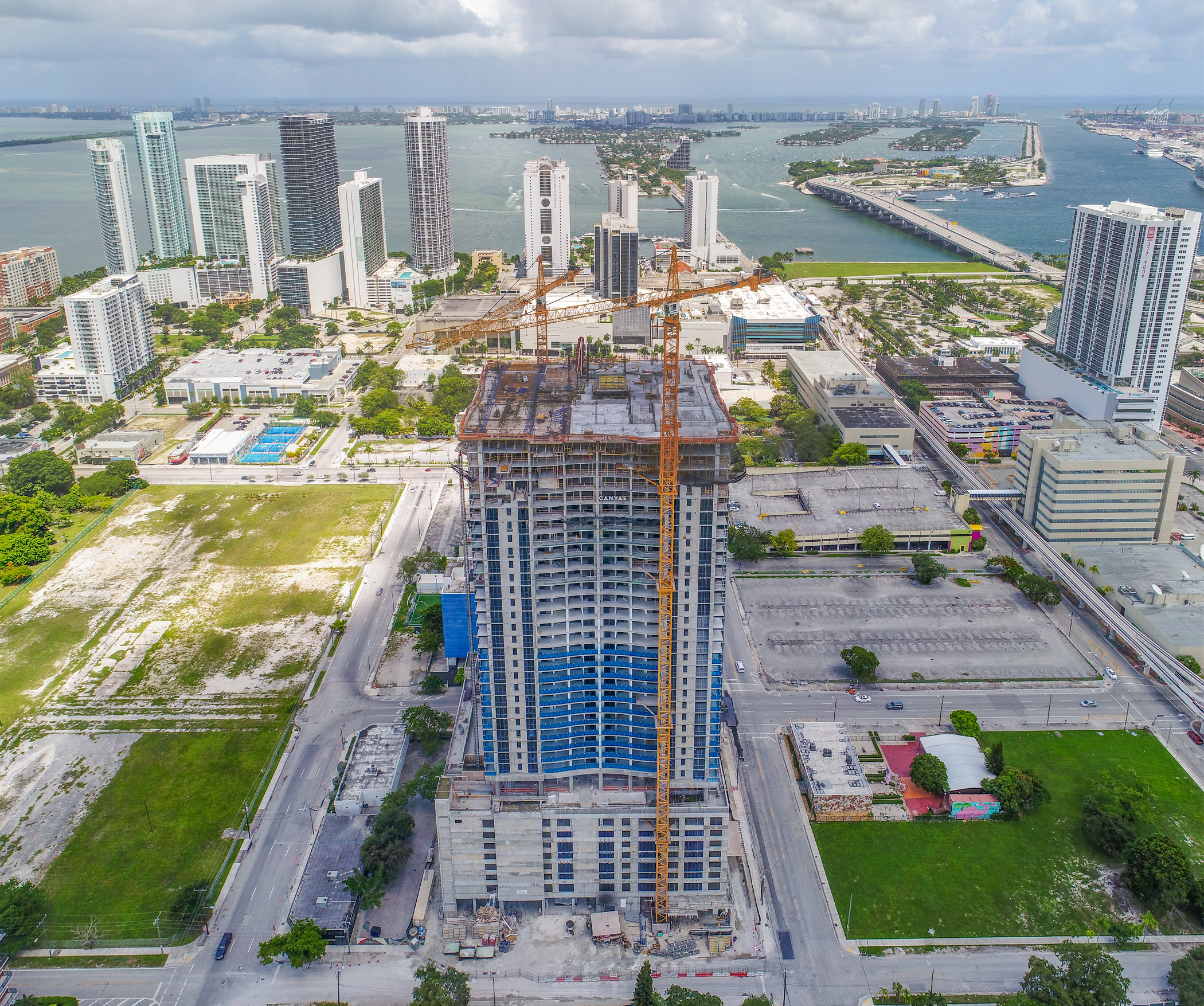
Construction Update: CANVAS Tops off In Miami's Arts + Entertainment District
CANVAS Condominium from NR Investments has topped off their 37 story residential tower in Miami’s burgeoning Arts + Entertainment District (A+E). The announcement was made August 10, 2017 in tandem with general contractor Stiles Construction and the project’s exclusive broker, Fortune International Realty. Prices for the remaining inventory ranges from $345K to $654K, with sizes encompassing 620 SF to 1,110 SF. With CANVAS being Fannie Mae approved, prospective buyers are able to capitalize on reduced deposit requirements and other benefits of the program, furthering access to millennials and first-time buyers. The sleek, contemporary tower with ocean, bay, sunset and Miami skyline views. In a nod to the surrounding local influence including Wynwood, one of the newly unveiled hallmarks of the tower will be a massive, collaborative installation involving 22 globally renowned street artists and yielding more than 200 original works of art for the building’s residential corridors and common areas. CANVAS is expected to be delivered to residents next spring (2018) after the project originally broker ground in February 2016.
CANVAS is located at 1630 N.E. 1st Avenue, in the heart of of Arts + Entertainment District. Developer NR Investments and its principals are the founders of the Arts + Entertainment District, an enclave flanked by Wynwood, Edgewater and downtown Miami. At CANVAS, amenities include sunrise and sunset pool decks, a serene indoor/outdoor yoga garden, a state-of-the-art gym, a glass-enclosed racquetball court, Zen spa/sauna treatment rooms, and a multimedia screening and theater facility.

“Buyers have been flocking to this project from across the globe,” said Ron Gottesmann, Principal of NR Investments. “We know this neighborhood presents a great deal of appeal among those looking for a central location in a neighborhood being fueled by the arts – one that puts residents within walking distance of area landmarks and top entertainment venues. For those seeking a second home or primary residence, CANVAS represents the opportunity to be at the epicenter of everything Miami has to offer.”
“What we’ve built in the Arts + Entertainment District has been transformative…and CANVAS is a direct reflection of that,” said Nir Shoshani, Principal, NR Investments. “Overall, this is an important moment for the city as it is another example of the strong interest among buyers to live in the urban core of Miami and take advantage of its art-infused offerings.”
Enjoy the Top-Off Video Below:

Photos & Video Via Golden Dusk Photography

Lawsuit Filed Against David Beckham & Miami's Proposed Overtown MLS Stadium
Despite the success of El Clasico Miami, yet another delay has hit David Beckham and Miami's future MLS stadium which has been proposed in Overtown. Bruce Matheson has filed a lawsuit against Miami-Dade County, challenging the future use of the land on the basis of its acquisition. Matheson's suit aims to stop a $9 million sale of 3 acres as part of the assemblage, which was sold based on the state of Florida's Economic-Development Law as a no-bid sale and was never offered to other buyers. Bruce Matheson has previously blocked the expansion of the Miami Open on Key Biscayne and his antics have begun to frustrate city officials who allege that Matheson's goals seem to be to drive professional sports out of Miami. County commissioners originally approved the sale on June 6 and Beckham expects to receive league approval to officially launch Miami's franchise in August (2017).

Florida East Coast Industries Announced Park-Line Residential Rental Residence Brand to Launch at MiamiCentral & Palm Beach
Capitalizing on the new connectivity that the Brightline will be bringing to South Florida, Florida East Coast Industries (FECI) has announced that they will debut their new residential property brand, Park-Line, at MiamiCentral and Palm Beach. The brand will launch in 2018 with a 290-unit tower in downtown West Palm Beach, followed by two towers with a total of 816 units at MiamiCentral in 2019. The Park-Line brand will be an integral part of FECI’s dynamic, transit oriented developments transforming South Florida.
“Park-Line residences are designed for people on the move who want to live and travel smarter,” said Daniel Quintana, Vice President of Development for Florida East Coast Industries. “Each of the innovative towers in West Palm Beach and Miami will expand residents’ playground and working options by utilizing a vast variety of transit options just steps away from their front door, including our new Brightline train service that will seamlessly connect Miami, Fort Lauderdale and West Palm Beach.”
Residences at Park-Line properties will come in studio, one and two bedroom floor-plans in West Palm Beach and studios, one, two and three bedroom apartments in MiamiCentral. Every residence will be highlighted by floor-to-ceiling windows, classic designer finishes and a collection of unparalleled amenities. Amenities will include a full-service poolside lounge; open-air cross training course; yoga lawn and fitness center with juice bar; private cabanas with outdoor grills and intimate seating areas; shaded dog parks and pet grooming salon; event lawn with movie screen and full social calendar of resident events. Unique to the MiamiCentral location, residents will have direct access to 180,000 SF of retail space including Miami’s first true food hall experience, Central Fare. The Park-Line residences will be located within steps of the Brightline express intercity train service connecting Miami, Fort Lauderdale and West Palm Beach with new downtown stations. Park-Line in West Palm Beach will launch in 2018, followed by the MiamiCentral location in 2019.


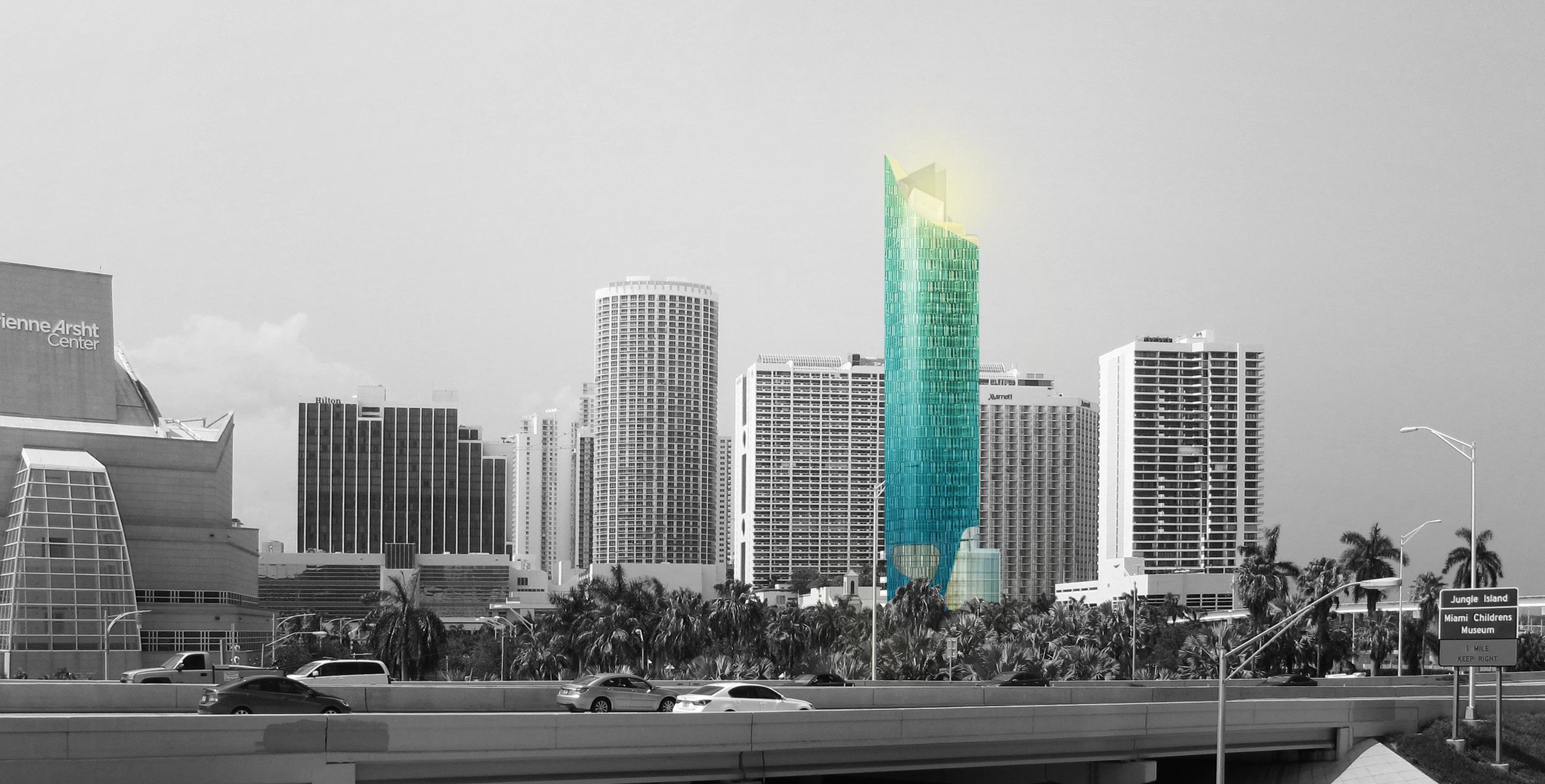
Plans Unveiled for 40-Story Courtyard by Marriott Hotel in Downtown Miami
Plans and a new rendering have been released of the 40-story proposed Courtyard by Marriott Hotel in Downtown Miami. The Allan Shulman designed hotel tower is expected to rise 580 feet and will feature 270 hotel rooms along with a rooftop bar, office space and retail space. The design will feature a unique curtain wall system of colored glass. The 11,700 SF lot, which Mandala Holdings purchased for $8 million in 2016, is across adjacent to Genting's property for Resorts World Miami as well as the Metromover. The Courtyard by Marriott project is expected for completion in 2020.

Construction Update: Three MiamiCentral, MiamiCentral's First Office Building, to Open by End of Summer
Three MiamiCentral, the first building to open as part of the 11-acre, mixed-use MiamiCentral initiative by Florida East Coast Industries in Downtown Miami, is expected to open by the end of the summer (2017). The second office building, Two MiamiCentral, is expected to open in the fall (2017). Three MiamiCentral features 90,000 SF of rentable Class A Office Space, 35,000 SF of rentable ground level retail space and is adjacent to the MiamiCentral transit station. Two MiamiCentral will feature 190,000 SF of Class A Office Space with tenants including Ernst & Young, Cisneros, Moss & Associates, Venevision International Enterprises, Fortress Investment Group, Florida EAst Coast Industries and Regus. Rental rates at Two MiamiCentral are around $33 to $35 SF triple net; and $29 per square foot at Three MiamiCentral. MiamiCentral will feature All Aboard Florida's Brightline station for rail service connecting Fort Lauderdale, Palm Beach and Orlando.


