
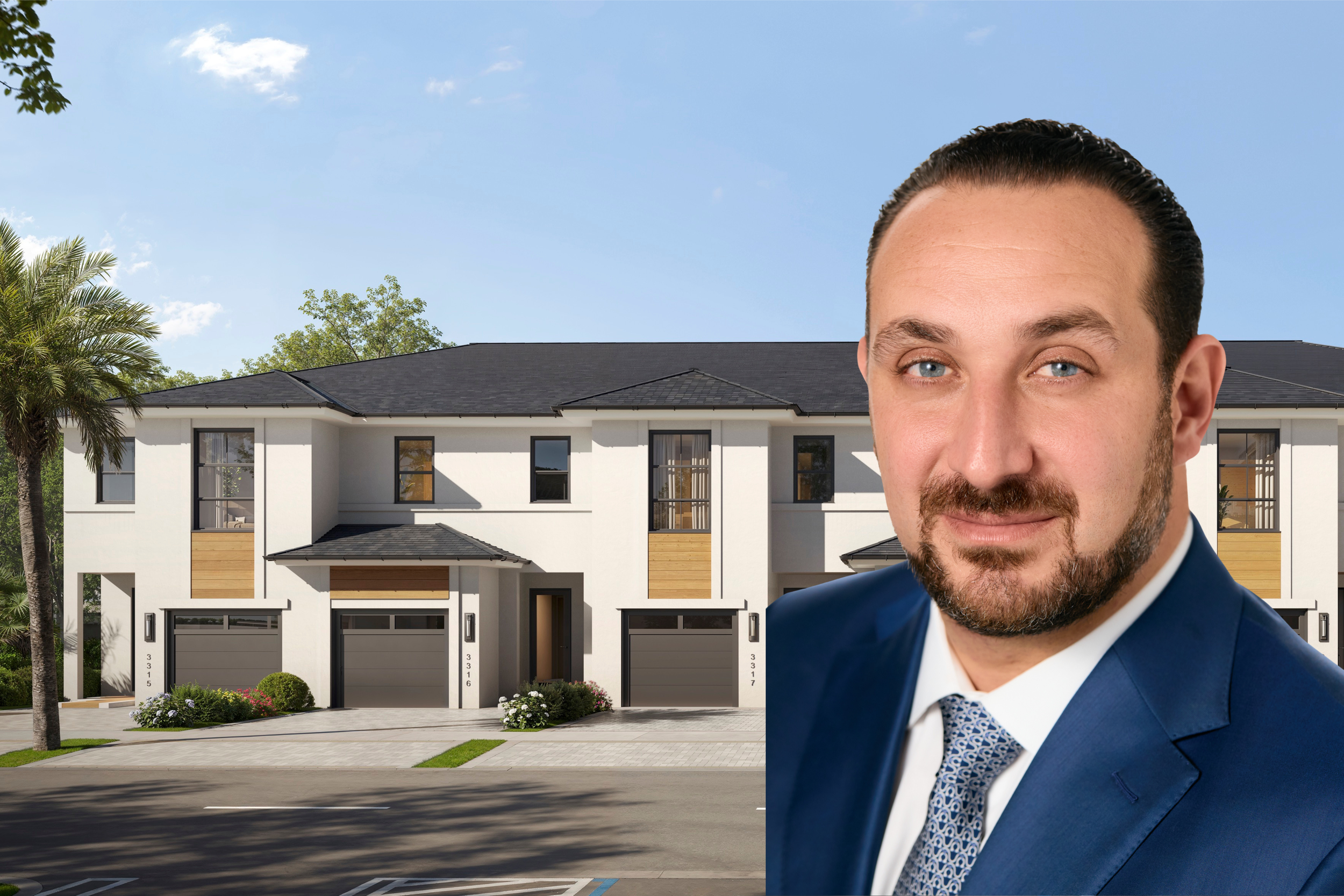
PROFILEmiami had the exclusive opportunity to sit down Bluenest Development CEO Salim Chraibi to discuss how his company is reshaping Miami-Dade’s attainable housing market. As home prices in Miami-Dade continue to soar, the dream of homeownership feels increasingly out of reach for the region's workforce. Enter Bluenest Development—a homebuilder focused on attainable, for-sale housing for those earning between 80% and 140% of the area median income.
Since launching in 2018 with just six single-family homes, Bluenest has rapidly scaled by targeting emerging neighborhoods and working alongside local governments to deliver homes priced well below the county median. Their mission goes beyond housing—it's about creating generational wealth and long-term community stability.
PROFILEmiami caught up with Salim to learn about how Bluenest Development is providing homeownership opportunities to the workforce while navigating the challenges of scaling in one of America’s most competitive real estate markets.
PROFILEmiami: What inspired you to launch Bluenest Development, and how has your mission evolved since 2018?
Salim Chraibi: We started in 2018, building just six single-family homes, and right away, I saw how many people were struggling to buy a home, priced out of the American dream of homeownership. That’s what inspired me to scale. Today, we are focused on developing homes in emerging neighborhoods throughout Miami-Dade County, catering to the workforce earning between 80% and 140% of the area median income. What surprised me early on was that nearly all the workforce housing being built was for rent. No one was offering for-sale options. I’ve always believed that every business should solve a real problem, and this one matters. It’s not just a high-demand product—it’s good karma. We're building something that meets a real need and doing it at scale.
PROFILEmiami: How does Bluenest define "attainable housing," and why is this concept so important in Miami-Dade today?
Salim Chraibi: The median home sale price in Miami-Dade is $665,000, and we bring homes to market that are substantially below that number, around $450,000. We partner with local governments to offer incentives that help buyers layer financing—combining a traditional first mortgage with a second provided by the county. With the blended interest rate of 4.5%, their total monthly payment comes out to much less than what they'd pay to rent the same home. Another benefit is that they don’t have to pay for private mortgage insurance. We've had people break down in tears at the closing table because they never thought this would be possible. Years later, some still reach out to thank us.

PROFILEmiami: What’s your approach to scaling without compromising quality?
Salim Chraibi: We’ve developed a series of efficient, well-designed 3- and 4-bedroom models that we build consistently across our communities. These models are already approved in Miami-Dade, which allows us to bypass lengthy approval timelines and pull permits in under two weeks. We adapt each model to suit the character of the area, so only the elevations are different. This repeatable approach reduces costs and accelerates delivery, key factors in keeping costs down. Our scale also gives us purchasing power, and we’ve secured volume discounts with manufacturers. Homes priced around $450,000 often sell before construction is even complete, which helps reduce interest costs and our overall risk.
PROFILEmiami: Tell us more about your projects in Miami-Dade. What makes these locations strategically important for workforce housing?
Salim Chraibi: About 95% of our projects are in unincorporated Miami-Dade county, which makes the approval process easier. These areas are composed of infill locations and properties within the urban development boundary that are ideal for redevelopment
PROFILEmiami: What are some of the biggest challenges you've faced with zoning and land use in converting farmland to housing communities?
Salim Chraibi: The biggest challenge is local opposition - classic NIMBYism. Everyone agrees we need more workforce housing, but nobody wants it near them. You have residents on half-acre lots who bought over 3 decades ago and don’t want the character of the area to change with the addition of townhomes or single-family homes on smaller lots. We're not building high-rises — we're proposing compatible, low-density projects that provide homeownership opportunities. This kind of resistance is the main barrier to adding much-needed inventory.
PROFILEmiami: Your 1% down payment program is a bold step—how does it work, and what kind of buyer response have you seen?
Salim Chraibi: The program is available to buyers who make up the workforce of Miami-Dade County, typically between 80 and 140% of the Area Median Income. Buyers get pre-approved with one of our preferred lenders, who typically finance 75% of the purchase price, and the county provides the remainder through a second mortgage at 1%. The response has been incredible. Buyers are extremely grateful and are happy at the opportunity to own a home.

PROFILEmiami: Beyond building homes, how do you see Bluenest contributing to long-term neighborhood stability and generational wealth?
Salim Chraibi: We’re making generational wealth possible by lowering the barriers to homeownership. Many of our buyers can move in with less than half a month’s rent as a down payment, compared to the years it might take to save traditionally.
In many cases, our buyers gain more in home appreciation within two years than we earned as the developer. Over time, that equity builds. After 20 or 30 years, the home is paid off and can be passed down, worth significantly more than what was originally paid. We’re also building multi-generational options, like duplexes, where families can live together under one mortgage.
PROFILEmiami: Looking ahead, where do you see Bluenest in five years?
Salim Chraibi: In the next 3 to 5 years, we aim to expand across Florida because affordability is a statewide issue, starting with markets like Palm Beach County where we’re already looking at sites. We’ll continue building in Miami-Dade for as long as land is available. This is the market we know best and we’ve built strong relationships here.
PROFILEmiami: Tell us a war story
Salim Chraibi: Let’s just say—make sure you’re well insured if you’re in land development. One night my wife forgot her laptop at work and asked me to give her a ride. I was in pajamas, thinking it would be a quick ride. On the way, I got a call that there was a fire at one of our job sites—in Homestead, an hour away. So we rerouted immediately and stayed until 8 in the morning. Thankfully, everyone was safe, but it was chaos.
I was so nervous that I left the car running the entire night. When I tried to leave, the battery was dead. And of course, the skies opened up with pouring rain just as I tried to jump it. It was the longest, most stressful night of my life—and a great reminder that anything can happen in this business, usually at the worst possible time.